

What is Folic Acid?
Folic acid is an essential nutrient, and due to its critical role in fetal growth and maternal health, it is a crucial micro-element that women need during the preconception stage and during pregnancy.
This supplement should be recommended, especially in people who undergo fertility treatments, although the support of reproductive endocrinologists and specialists in the field of in vitro fertilization (IVF) highlights its importance.
Ensuring sufficient consumption of folic acid plays a significant role in the process of reducing the impact of major congenital defects and promoting positive birth outcomes.
Why Folic Acid is Important
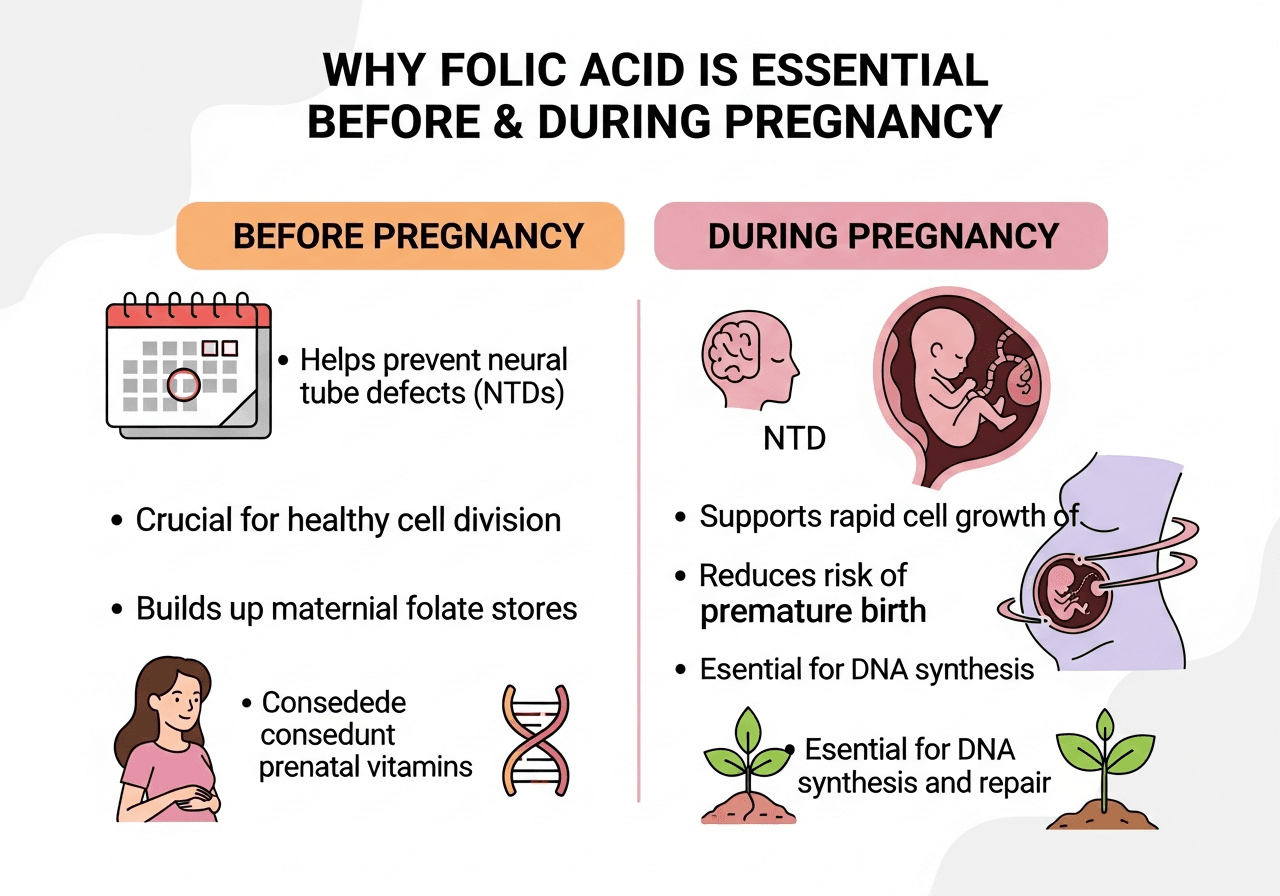
Vitamin B9 or folic acid is a necessary part of cell division and the formation of DNA, which begins during conception.
Women who are planning to become pregnant are advised to start the consumption of folic acid, including those seeking IVF treatment.
Why?
This is because neural tube defects (NTDs), serious abnormalities that affect the infant’s brain and spine which can be severe and manifest themselves early when the woman still does not realize that she is pregnant.
Prenatal folic acid intake aids the body in storing sufficient amounts of the nutrient to support early fetal development, reducing the risk of such defects.
Folic acid is also used to assist in red blood cell development and the prevention of maternal anemia, which is of benefit to the mother and the baby during pregnancy.
It also contributes to the protective development of the placenta and may reduce risks of complications like preeclampsia.
The best fertility clinics in Delhi emphasize that consumption of folic acid before pregnancy is the initial step towards a healthy pregnancy journey.
Role of Folic Acid During Pregnancy
The folic acid demand increases dramatically during pregnancy as the fetus develops at a rapid rate.
Vitamin B9 or folic acid continues to enhance brain development, division of cells, and formation of DNA throughout the trimesters.
The lack of sufficient folic acid may cause neural tube problems, low birth weight, etc.
Typically, 400 to 800 micrograms per day is the recommended amount and may be given once every day, although in some IVF cycles, the dose may be chosen depending on the health of a woman.
Individual folic acid regimens are provided by the IVF specialists and fertility experts in Delhi as an example of a comprehensive maternal program to guarantee the optimal level of nutrients for unnatural and natural pregnancies.
Folic Acid and IVF: Why It Matters
In the assisted reproductive technology setup, the role of folic acid has been greatly increased. The medical intervention of IVF in women exposes them to increased physiological and psychological stressors capable of impairing the absorption of nutrients and embryonic development.
Current front-runners in the IVF service insist on the early and regular administration of folic acid supplements, as they understand that this treatment has the ability not only to increase the quality of gametes, but also to raise the implantation rate of embryos, and to maintain pregnancy.
IVF centers under the guidance of leading professionals are actively implementing folic-acid regimens as part and parcel of larger folic-acid treatment plans and ensuring successful ovulation and optimum fetus growth through both rejuvenatory supplementation and folic-acid nutritional education and lifestyle adjustments.
Food Sources and Supplementation
Natural food sources rich in folate (the natural form of folic acid) include leafy green vegetables, legumes, nuts, and fortified cereals. However, the concentration in foods may not be sufficient to meet the heightened needs during pregnancy, so it is vital to get them through supplementation, filling the deficit produced by food.
To ensure that the mother takes an adequate amount of folic acid, healthcare providers recommend taking folic acid supplements in addition to a balanced diet.
Female patients planning pregnancy or fertility therapies need to meet the most qualified IVF doctors in Delhi or fertility specialists who provide customized recommendations on the dose of folic acid and the time of complementing the doses.
In some foods,f olic acid appears in synthetic form, folate, and this may be contained in some foods, such as:
- spinach, kale, Brussels sprouts, cabbage, broccoli
- beans and legumes (e.g., peas, seaweed, blackeye beans)
- yeast and beef extracts
- oranges and orange juice
- wheat bran and other whole-grain foods
- poultry, pork, shellfish, and liver
- Some brands of breakfast cereals.
A diet high in folate will, in itself, not be enough to protect the development of the fetus. It is mandatory to consume folic acid supplements alongside it.
How much folic acid should a woman take before and during pregnancy?
Women planning pregnancy or capable of becoming pregnant should take 400 micrograms (mcg) of folic acid per day at least 1 month before conception and continuing up until the twelfth week of pregnancy to reduce the risk of neural tube defects (NTDs).
After the first trimester, for the remainder of pregnancy, the daily dosage is also increased to 600 mcg to promote the continued growth of the fetus and the health of the mother.
Higher-Risk Dosages
Women at higher risk for NTDs, such as those with a previous pregnancy affected by an NTD, diabetes, obesity, or certain medications, should take 4,000 mcg (4 mg) of folic acid daily, starting 1-3 months before pregnancy and through the first trimester, under medical supervision.
Various prenatal vitamin preparations traditionally include 400-600mcg of folic acid, but higher dosages require an individual prescription by a healthcare professional.
IVF and Personalized Guidance
For women undergoing IVF, the best IVF doctors in Delhi recommend a standard 400-600 mcg preconception and early pregnancy, with adjustments based on individual factors like age, BMI, or ovarian response to optimize embryo quality and implantation. Consulting a top IVF specialist ensures tailored dosing alongside fertility protocols for the safest outcomes.
The standard dose of 400-600 mcg of folic acid is recommended to women who are undergoing IVF, with the adjustment based on personalised data like age, BMI, or ovarian response to optimize embryo quality and successful implantation. The best IVF doctors make these modifications according to each unique need & health profile.
How folic acid affects the success rate in IVF
Folic acid supplementation has shown positive effects influencing IVF success rates by enhancing the embryo quality, fertilization rates, implantation, and live birth probabilities, especially when the supplement is administered in a dose of above 800 mcg/day before the start of treatment.
Studies show positive modulating effects of high levels of pre-conception folate in the homocysteine pathway in the follicular fluid, thus improving the quality of oocytes and minimizing cycle failure before transfer of embryos, and even doubling the probability up to 3.3 times of pregnancy when the follicular fluid folate levels are doubled. (1)
However, results vary, particularly in situations of unexplained infertility, where folic acid status alone cannot be in any way related to the success, making it necessary to incorporate individualized folic acid treatment by skilled IVF doctors in Delhi, who seek to combine such treatment with novel reproductive technologies.
Conclusion
Folic acid is vital, especially to women who are about to conceive a child or are undergoing IVF treatment, and it is crucial for reducing the risk of birth defects or congenital malformations, supporting maternal health, and ensuring the best pregnancy outcomes. Early and prolonged folic acid intake has become a clinical imperative that has been supported by fertility experts especially the best IVFs in Delhi recommend every pregnant woman to take folic acid supplements along with high folate diet to avoid serious abnormalities like NTDs, or defects like spina bifida and anencephaly, can occur in the first few weeks of pregnancy, sometimes before a woman knows she is pregnant.
For those seeking expert guidance and personalized fertility care in Delhi, consulting the best IVF doctors ensures comprehensive support, including essential nutritional counseling such as folic acid supplementation, diet, dos & don’ts, and gentle exercise.
The top IVF centres in Delhi are the ones that combine advanced reproductive technology with clinical nutritional expertise to give every woman the healthiest and beautiful start to motherhood.
Booking a consultation with a top IVF specialist in Delhi can help prospective parents navigate this critical phase with confidence and clinical precision.
