

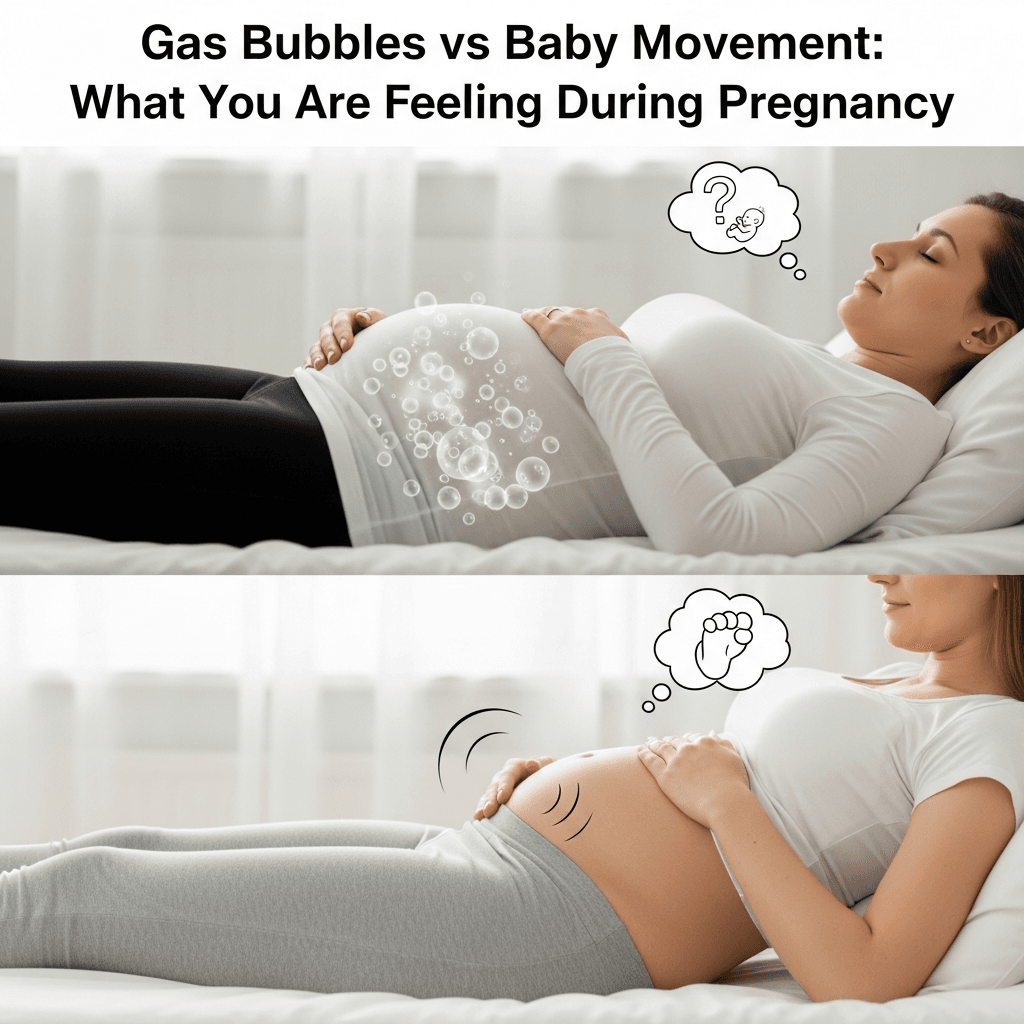
The pregnancy is accompanied by several varieties of sensations, ranging from flutters to twitches, and it may also happen that an expectant mother sits and wonders whether she feels bubbles of gas or san feels the initial movements of the baby. The difference between the two is essential to provide reassurance and check fetal well-being. The current blog has discussed the physiological differences, timelines, and tips that are based on the known obstetric knowledge.
What are Gas Bubbles in Pregnancy?
The main causes of gas bubbles are changes in hormones, especially the increase of progesterone hormone that causes relaxation of digestive muscles, decreasing their digestion rate, permitting the build-up of gas. The expanding uterus presses on to intestines, which worsens bloating during the first and second trimesters. Symptoms normally consist of rumbling, sharp pops, or the feeling of fullness in the lower abdomen, mostly on the left side, with a sensation of indigestion or ease following the passing of gas.
These emotions change with shifts in positions or a bowel movement and are accompanied by bloating, which is visible. In contrast to fetal movement, gas is not rhythmic, not emotionally stimulating, and more uncomfortable and discomforting. It may be confused with quickening by first-time mothers; however, one may distinguish between the two by observing the patterns, like the time after a meal.
How do You Recognize Baby Movements?
Baby movements or quickening begin normally at 16-25 weeks, although in multiparous women, it begins earlier at around 13-16 weeks, since mothers are already used to it. Those early movements resemble butterflies, gentle twitches, or even bubbles in the lower abdomen and change into specific kicks, rolls, or hiccups by the 3rd trimester. These are rhythmical and react to stimuli, either sound or touch, and cross the abdomen, according to fetal positioning.
Fetal movements also assure normal growth, and one can predict particular patterns by the 28th week, which usually consists of 10 movements in two hours. They cause happiness, not pain, and continue till the baby repositions. Less activity is something that deserves medical intervention. (1)
How to Identify Quickening Sensations & Progression
Factors like anterior placenta, maternal body size, or fetal position can delay perception, but ultrasound confirms viability earlier.
First quickening is uneven and weak and is at the pubic bone, and then changes into rhythmic kicks, rolls, or hiccups during the third trimester. It is like gas except that it would persist, be receptive to stimuli (e.g., sound or food), and emotionally elevate. Kick counts of 28 weeks control fetal well-being.
Key Differences: A Comparison Between Gas Bubbles & Baby Movements
| Aspect | Gas Bubbles | Baby Movement |
| Timing | Anytime, often after eating | 16-25 weeks onward, consistent daily |
| Location | Lower abdomen, shifts with gut | Below the navel, it spreads to the sides/ribs |
| Sensation | Rumbling, crampy, heavy relief | Flutters to kicks, rhythmic, joyful |
| Duration | Brief, resolves with gas passage | Repeated, purposeful patterns |
| Accompaniments | Bloating, indigestion, constipation | None; responds to maternal stimuli |
This table highlights physiological distinctions: gas ties to digestion, while movements reflect neuromuscular maturity. Location aids early discernment; gas favors the sigmoid colon area.
Factors Influencing Sensations
Diet also contributes; foods that are likely to become gassy, such as beans or carbonated beverages, or dairy, will add to the gas bubbling through fermentation. Early kicks are smothered with anterior placentas, which resemble gas. Perception changes due to maternal factors, e.g., obesity or anxiety, and abates due to hydration and fiber.
Pain may seem delayed during IVF pregnancies because of increased perception or drug use on digestion; however, patterns are similar to the natural ones. Viability scans are tracked with the help of apps or kick charts.
When to Consult a Specialist
Immediately seek the services of a gynecologist in case the fetal motions become slow, fewer than 10 in two hours following the 28 weeks, or come to a halt, since this could be an indication of fetal distress.
Pain in the abdomen to the point of severe pain, cramping, heavy bleeding, spotting, uncharacteristic swelling of hands/feet/face, chronic headaches, vision changes, high fever, and unusual discharge, all should be immediately considered as the possibility of complications such as preterm labor, preeclampsia, and placental problems.
The check-ups to monitor fetal well-being through routine checks using ultrasound frequency, or Doppler, are reassuring, particularly when there is a question of whether the gas and quickening have taken place.
Pregnancies requiring IVF and those with previous related complications are at high risk and thus should be visited frequently to have special assessments. Early intervention results in the best outcomes for mother and baby.
Practical Tips for Differentiation & Comfort
- Lie on your left side quietly for 30-60 minutes daily to experience movement without digestive interference.
- Have small pre-gastric meals; probiotics help the gut.
- Record through journal: time, intensity, triggers, patterns only become clear in weeks.
- Gently massage the belly; the newborn will cooperate, but infant gas won’t.
For personalized guidance and reassurance, it is recommended that the individual take consultations with the best gynecologist in Delhi would be the ideal choice as experts tailor their advice would be more specific to the requirements of the patient, especially to those undergoing advanced IVF treatment in Delhi.
Advanced Insights for IVF Pregnancies
IVF Effects on Sensations
The IVF pregnancy leads to an increase in early awareness because the progesterone supplement relaxes the intestinal muscles, imitating the natural hormones, and slows the intestinal motility to imitate gas sensations that obscure quickening feedback. This makes it hard to understand the first flutters in the backdrop of emotive emphasis on viability.
- Progesterone slows down digestion, and the lines between gas and movement are not clearly outlined.
- Feelings of alertness increase insecurity at an early stage.
Patterns by transfer of serial ultrasounds on embryo transfer determine the heartbeat, development, and location, which assures the build-up of confidence.
Seeking care with the best gynecologist in Delhi will ensure that both routine and high-risk pregnancies, including those undergoing advanced IVF treatment in Delhi, receive adequate monitoring, which is specialized for the mother and occurs timely manner that best suits the optimal well-being of both the mother and the child.
Monitoring & Strategies
More sophisticated non-invasive Doppler waveform monitoring identifies fetal motions as opposed to gut noise through rhythmic cardiac accelerations, out of recognition of basic auscultation. Time-lapse pictures, AI embryo selection,hCGg/progesterone monitoring, and other wearables allow tracking accurate daily kicks despite medication.
- Individualized IVF surgery maximizes success:
- First-trimester scans are done every week.
- The 28-week biophysical profiles.
- Movement response non-stress tests.
Light walks, PGT-A genetic screening, and hydration discourage confounders and anomalies by encouraging reassurance in the actual quickening of selected interventions in time.
Conclusion
Understanding the difference between the effect of gas bubbles and fetal movements will be enough to give relief to the mother, especially women who are experiencing pregnancy through IVF, where they may feel uncertain and unknown sensations may feel confusing.
These symptoms can be managed using systematic and regular monitoring, specific nutritional adjustments, and expert support from the best gynaecologist in Delhi can help you maintain and understand the situation according to your pregnancy, whether it is conceived naturally or through IVF treatment.
IVF advanced treatment in Delhi offers comprehensive care that reassures parents through advanced technology, personalized guidance, and an expert approach to the condition, ensuring the healthiest journey towards parenthood.